

Industries We Service Across Sydney
No call out fee
No service fee
No scissor lift fee
Tailored Solutions for Your Business Needs
We understand that every business is unique. That’s why we offer personalized refrigeration solutions that fit your specific operational requirements, ensuring efficiency and cost-effectiveness.
Unmatched Expertise in the Industry
With over four decades of combined experience, our team delivers top-notch service and innovative solutions backed by industry-leading knowledge and skills.
Rapid Response and Reliable Support
Our 24/7 customer support ensures that any issues are addressed promptly, minimizing downtime and keeping your business running smoothly.
Industries We Service Across Sydney
Commercial refrigeration is not one product served four different ways. A vaccine fridge in a Bondi pharmacy, a multi-deck case in a Parramatta IGA, a glycol beer system in a Surry Hills pub, and a CO2 trans-critical pack in a Western Sydney cold store all sit under the same broad heading, and they all behave differently. They run to different temperatures, fail in different ways, are governed by different regulators, and reward different servicing approaches.
Freelance Refrigeration & Air Conditioning has spent decades servicing commercial and industrial refrigeration across the Sydney metropolitan area. We have built our team, our service protocols and our documentation around the realities of the four industries that account for almost all commercial refrigeration in Sydney: hospitality, retail food, healthcare and warehousing. The pages below cover each one in depth. This page covers what is common across them, where they diverge, and how to think about the right refrigeration partner for your sector.

Why Industry-Specific Refrigeration Expertise Matters
A general refrigeration mechanic is qualified to work on a refrigeration system. An industry-aligned refrigeration mechanic is qualified to work on a refrigeration system in the operational, regulatory and commercial context of your business. The difference matters more than it sounds.
In hospitality, a refrigeration callout is also a service-disruption event, where every minute of downtime is lost trade and every hour of warm storage is potentially compromised stock. In retail, refrigeration failure is a stock-loss event measured by the case-load, and product temperature is what the inspector probes, not cabinet temperature. In healthcare, a fridge failure is a cold chain breach with mandatory reporting obligations and stock that may need to be quarantined and discarded. In warehousing, refrigeration is the largest controllable operating cost, and a single percentage point of efficiency improvement is real money on the power bill.
These are different problems requiring different responses. The best maintenance plan for a restaurant kitchen is the wrong plan for a vaccine fridge. The fastest emergency response protocol for a supermarket is the wrong protocol for a cold storage warehouse. We service the equipment, but we deliver the service in a way that respects the industry.
The Four Sectors We Service in Depth
1. Hospitality
Sydney hospitality is one of the densest commercial kitchen environments in Australia. We service refrigeration in restaurants, cafes, hotels, pubs, bars, clubs, catering kitchens, dark kitchens and quick-service venues. Our work spans walk-in cool rooms, prep fridges, blast chillers, glycol beer systems, wine cabinets, ice machines and back-of-house freezer rooms.
The defining compliance framework is the Food Standards Code, particularly Standard 3.2.2, which requires potentially hazardous food to be held at 5°C or colder, or 60°C or hotter. The 2-hour/4-hour rule governs how long product can be cumulatively in the danger zone. NSW Food Authority inspections check both equipment and records, and a refrigeration partner who understands that distinction is a quiet but important asset for any operator.
2. Retail and Supermarkets
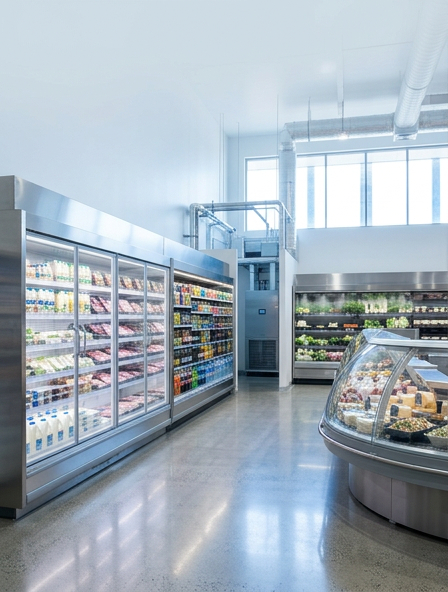
Retail food refrigeration runs harder than almost any other category. We service supermarkets, IGAs, butchers, bakeries, fishmongers, delis, organic and specialty grocers, and convenience and petrol-station stores across Sydney. The equipment ranges from integral and remote multi-deck cabinets through to glass-door uprights, plug-in island freezers, deli serve-overs and back-of-house cool rooms and freezer rooms.
Retail compliance is enforced at the cabinet, not at the room. A display case that reads 4°C on its panel can still test 7°C at the front-top shelf where the inspector probes the product. Energy is the other constant pressure, in a typical supermarket, refrigeration is the majority of the electricity bill, and small efficiency gains compound across hundreds of operating hours per cabinet per week. We service equipment with both compliance and energy on the report.
Healthcare and Medical
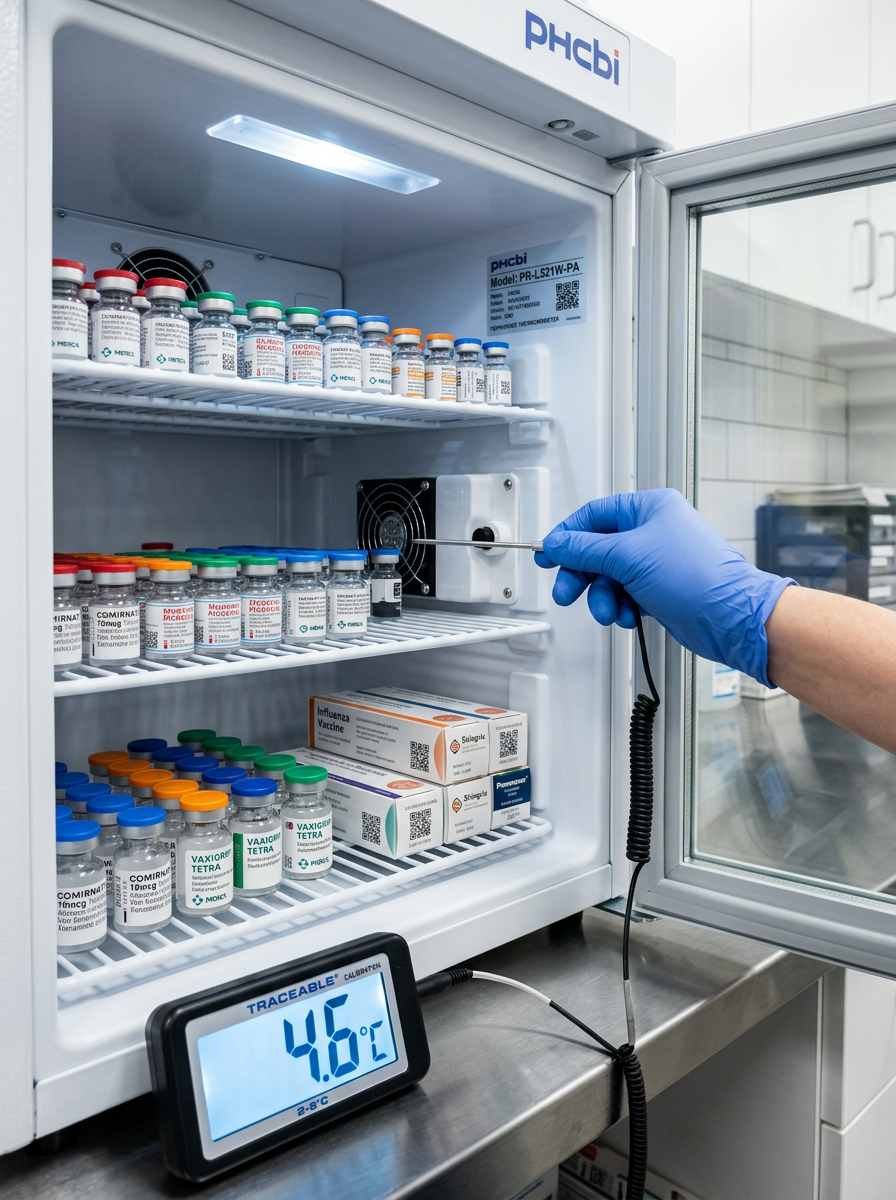
Healthcare refrigeration is governed by some of the strictest temperature handling requirements in any sector. We service general practices, community pharmacies, dental practices, pathology collection centres, aged care facilities, day surgeries, specialist clinics, fertility and IVF clinics, and veterinary practices. The core equipment is the purpose-built vaccine refrigerator (PBVR), with adjacent storage for medications, biologics, and pathology samples.
The framework is the National Vaccine Storage Guidelines, known as Strive for 5, currently in its 4th edition (2025). Vaccines must be held between +2°C and +8°C, with the target at +5°C. Domestic and standard commercial fridges are explicitly not permitted for vaccine storage. Annual servicing by a qualified refrigeration technician is mandatory. Any temperature excursion outside the range (other than excursions up to +12°C lasting 15 minutes or less, for example during restocking) is a cold chain breach and must be reported. Service documentation in this sector is not optional, it is part of the audit trail.
Warehousing and Industrial
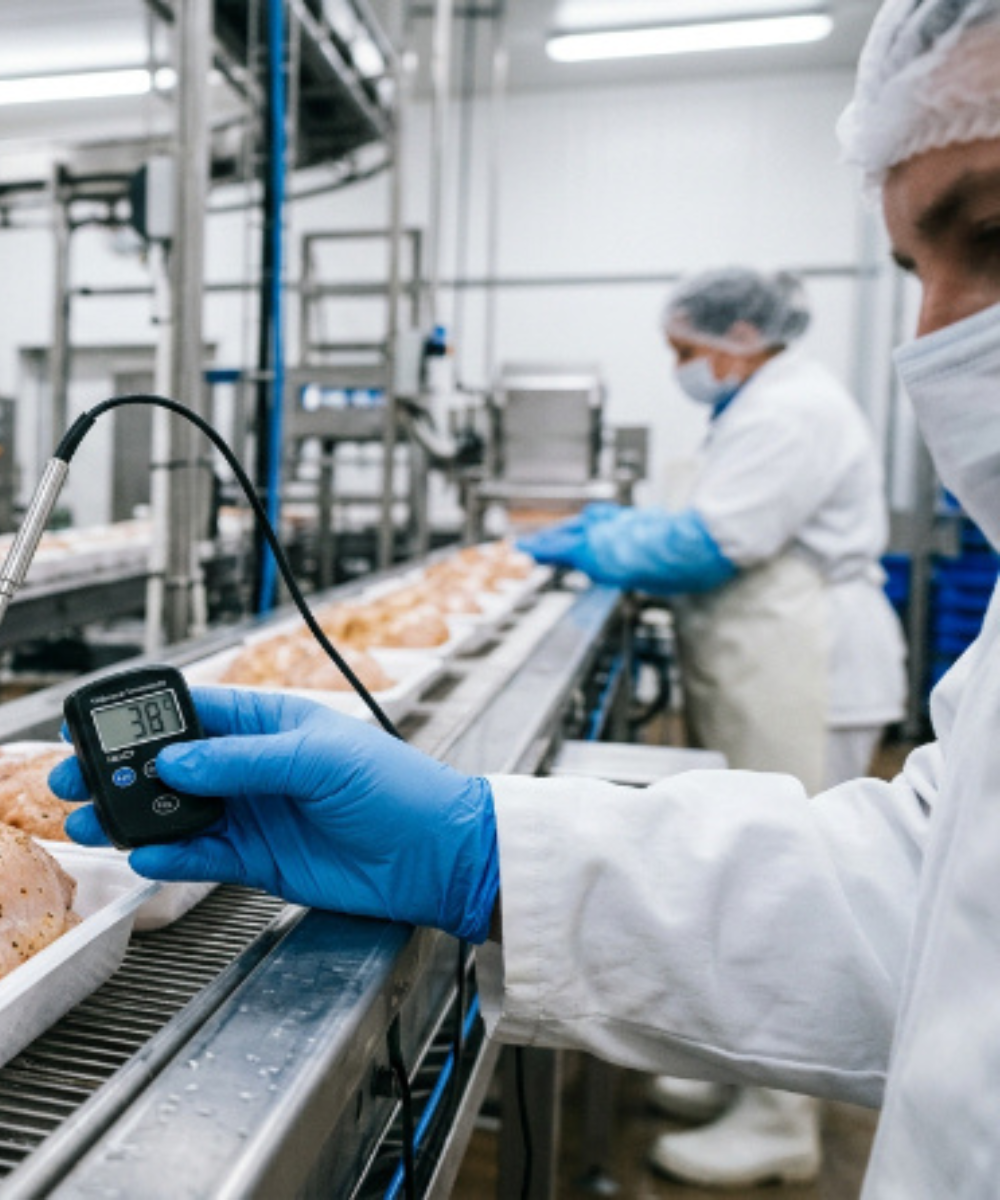
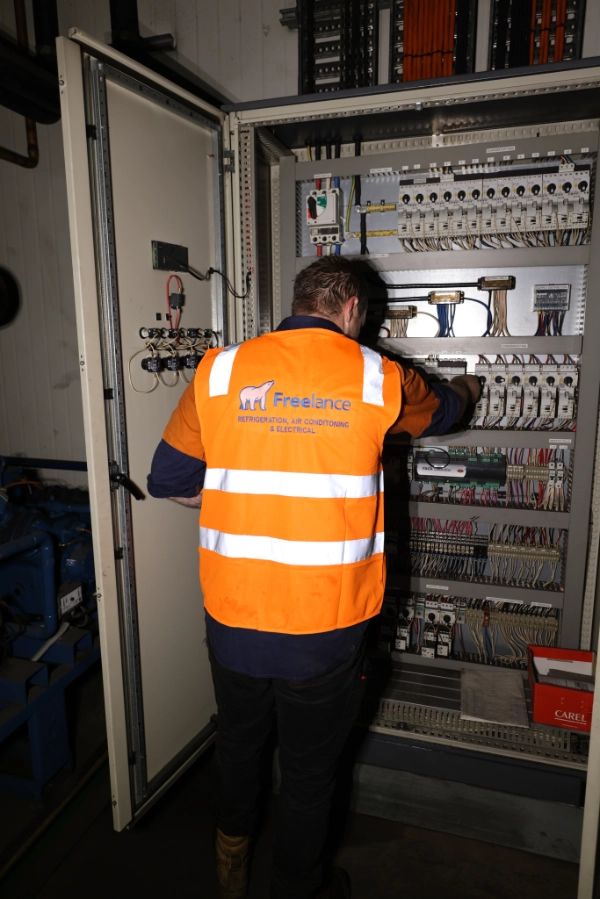
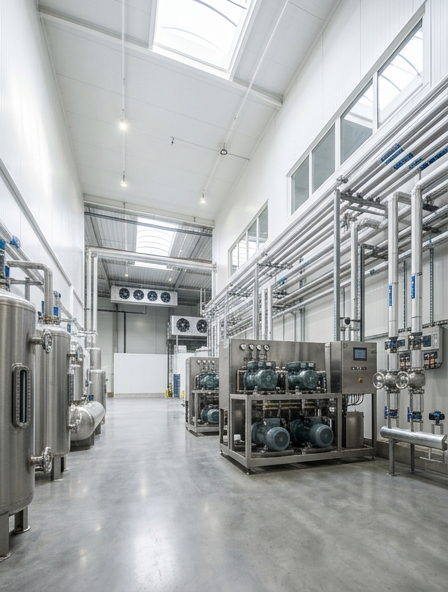
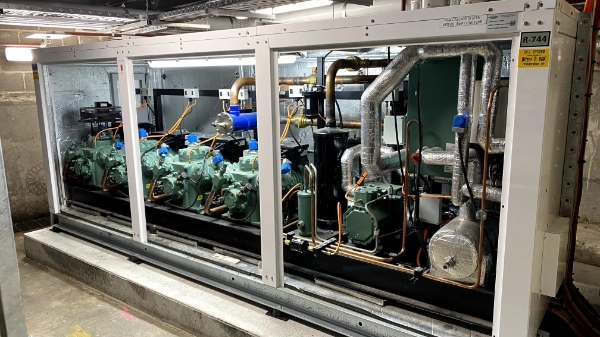
Industrial refrigeration is a different scale of problem. We service cold storage warehouses, food processing plants, distribution centres, third-party logistics (3PL) operators, beverage and brewery operations, manufacturing facilities, agricultural and horticultural cold stores, and seafood and meat processors. The systems span CO2 transcritical and subcritical, ammonia (including low-charge ammonia DX), hydrocarbon, HFC and HFO refrigerants, and glycol secondary loops.
Industrial compliance is layered. Food Standards Australia New Zealand (FSANZ) covers food temperature handling. Work Health and Safety legislation covers worker conditions inside cold zones. The Building Code of Australia covers structural and insulation aspects. Refrigerant handling sits under the Ozone Protection and Synthetic Greenhouse Gas Management Act, requiring ARCtick licensing for any work on controlled refrigerants. Above all of this sits energy cost, which on a refrigerated facility of any size is the single most aggressive line item to manage.
What These Industries Share
The four sectors look very different on the surface, but they share four operational truths that shape how we work with all of them.
Refrigeration Failure is Always a Crisis
In none of these industries is a refrigeration failure a routine inconvenience. Stock loss, regulatory exposure, customer impact and operational disruption all compound rapidly. Our 24/7 emergency response is staffed every day of the year, and our technicians are dispatched immediately on emergency call-outs.
Compliance is Built Into the Equipment
Every one of these industries has a regulator that cares about temperature. NSW Food Authority for hospitality and retail. Public health units for healthcare. FSANZ, WHS and the BCA for industrial. Refrigeration that drifts out of compliance does so quietly, often weeks before staff notice. Our preventive servicing is built around the regulatory checks each industry actually faces, not just manufacturer specifications.
Energy Efficiency is the Hidden Margin
Across all four sectors, refrigeration energy is one of the largest controllable operating costs. Hydrocarbon refrigerant conversions, EC fan motor upgrades, condenser cleaning, defrost cycle optimisation, door seal integrity, strip curtains, variable speed drives and floating head pressure all deliver real, measurable efficiency gains. We approach servicing with energy as a deliverable, not a sales pitch.
ARCtick Licensing and Refrigerant Handling
All work on controlled refrigerants in Australia must be performed by an ARCtick-licensed technician. Our team holds the appropriate licensing across the refrigerant types we work with, including HFCs, HFOs, hydrocarbon refrigerants, CO2 and ammonia.
Why These Four Things Matter to Your Operation
If a refrigeration partner cannot demonstrate genuine 24/7 response, compliance-aligned servicing, energy-efficiency expertise and full ARCtick licensing, they are not a fit for any of the four industries above. These are not value-adds. They are the baseline.
Adjacent and Specialty Sectors
Beyond the four core sectors, we service a number of adjacent industries that share refrigeration requirements with one or more of the above. These include:
- Florists and nurseries: Cool rooms with humidity control for cut flowers and propagation.
- Wineries and cellars: Temperature and humidity-controlled storage for wine and barrel ageing.
- Educational and research facilities: Laboratory refrigeration, sample storage, ultra-low freezers.
- Sports and recreation: Ice rinks, ice machine plants, athlete recovery refrigeration.
- Funeral and mortuary services: Mortuary refrigeration, body storage and transport cooling.
- Cannabis and pharmaceutical processing: Climate-controlled production environments and cold storage.
If your industry is not listed above and you have refrigeration needs, call us. The chances are we have done similar work, and if it is genuinely outside our scope, we will tell you and point you to someone who is a better fit.
Choosing the Right Refrigeration Partner for Your Industry
Most operators choose a refrigeration contractor based on price, response time and reputation. These are reasonable starting filters, but they miss the most important question: does this contractor understand the regulatory and operational realities of my industry?
Some practical things to ask a prospective refrigeration partner:
- Do you have specific experience in my industry, and can you describe the compliance framework I operate under?
- What does your service report look like, and is it formatted in a way I can hand to my regulator?
- How do you handle emergency callouts, and what is your typical response time in my area?
- Are you ARCtick-licensed across the refrigerant types I run, and can you produce the licensing documentation?
- How do you approach energy efficiency, and can you show me where you have delivered savings for similar operators?
- Do you have references in my industry I can speak to?
These questions sort the contractors who are equipped to support your operation from those who are simply available.
Talk to Us About Your Industry
Whether you operate a single venue, a multi-site network, a specialty facility or a major industrial operation, we will engage with the specifics of your industry, not a generic refrigeration script. Call 1300 037 335 or request a quote online.
What our clients say

Learn more
Monitoring & Compliance Checklist
Inspectors expect more than working fridges — they want consistent records, weekend coverage, and documented corrective actions. A practical checklist for staying audit-ready.
NSW Food Safety Obligations for Refrigeration
NSW food safety law treats refrigeration as a critical control point — the obligations it places on Sydney businesses, the failures that come up most often in inspections, and why specialist comm…
Practical Tips for Sydney Food Businesses
What Sydney council inspectors actually look for — overnight temperature control, logs that match reality, documented breach responses, and equipment condition in tight kitchens.