

Refrigeration Leak Detection Sydney
No call out fee
No service fee
No scissor lift fee
Leak Detection in Commercial Refrigeration
Refrigeration leak detection in Sydney is no longer a routine maintenance item you can afford to ignore. With refrigerant prices climbing sharply under the Australian Government’s HFC phase-down, even a small leak in a cool room, freezer, or process chiller can drain thousands of dollars in lost gas before anyone notices a temperature problem.
For warehouse operators, food manufacturers, and commercial cold storage facilities across Greater Sydney, the maths has changed. Regassing a system without first finding and repairing the leak is effectively pouring money into a broken pipe. At current prices, a single regas on a medium-sized cool room can cost between $1,700 and $4,000 depending on the refrigerant and charge size. Repeat that every few months because the underlying leak was never fixed, and the numbers become difficult to justify.
This page explains how professional leak detection works, why it matters more now than it ever has, and what Sydney businesses should expect from the process.

Why Refrigerant Leaks Cost More Than They Used To
The cost of common commercial refrigerants has increased dramatically over the past several years. R404A, still the most widely used gas in commercial cool rooms and freezer systems across Sydney, is now priced well above $145 per kilogram at wholesale. For a facility running 1,300 kilograms of refrigerant, that represents a total gas value comparable to a house deposit.
This price increase is not temporary. The Australian Government is progressively reducing the amount of high-GWP (global warming potential) refrigerants that can be imported under the Ozone Protection and Synthetic Greenhouse Gas Management Act. As supply tightens, prices will continue to rise.
What this means in practice is that every kilogram of refrigerant lost through an undetected leak has a direct, measurable cost to the business. A system losing even a small amount of gas over several months can quietly consume thousands of dollars before anyone connects the rising energy bills or inconsistent temperatures to a refrigerant issue.
How Refrigerant Leaks Happen in Commercial Systems
Refrigerant leaks in commercial and industrial systems are rarely the result of sudden failure. Most develop gradually over time through a combination of factors specific to the operating environment.
- Vibration and thermal cycling: Compressors, condensers, and evaporators expand and contract with every cycle. Over years of operation, this movement fatigues joints, flare connections, and brazed fittings.
- Mechanical damage: Forklift traffic in warehouses, heavy pallets stored near condenser units, and general wear from daily operations can damage refrigerant lines or cause fittings to loosen
- Corrosion: Sydney’s coastal and sub-tropical humidity accelerates corrosion on copper lines, coil fins, and steel components, particularly in facilities near the coast or in areas with high salt content in the air.
- Poor installation or previous repairs: Flare joints that were not torqued correctly, brazing that was done too quickly, or replacement components that do not match the original specification can all become leak points.
- Age: Older systems, particularly those installed more than 10 to 15 years ago, are more likely to develop leaks simply due to the cumulative effect of time, thermal stress, and environmental exposure.
In many cases, the leak is slow enough that the system continues to operate. Temperatures may creep up slightly, the compressor may run longer cycles, and energy consumption may increase, but nothing fails outright. This is what makes slow leaks so expensive. The system compensates, the business pays more for electricity, and the refrigerant quietly escapes until the charge drops low enough to trigger a noticeable problem

How Professional Leak Detection Works
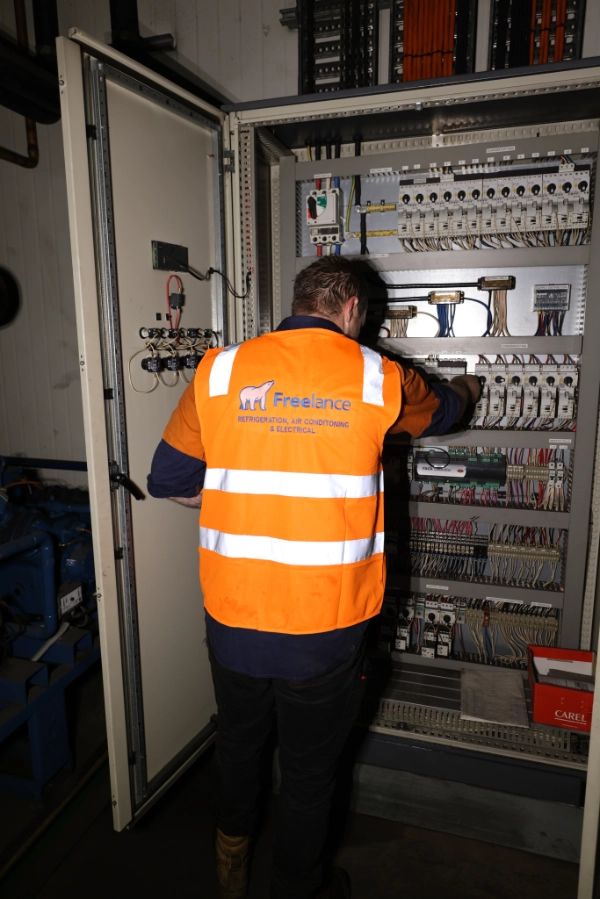
Effective refrigeration leak detection in Sydney requires more than a visual inspection. A qualified refrigeration technician will use a combination of methods depending on the system type, refrigerant, and suspected leak location.
- Electronic Leak Detection: Handheld electronic leak detectors are used to trace refrigerant vapour along the system’s pipework, joints, valves, and coil surfaces. Modern detectors are sensitive enough to identify leaks that would take weeks or months to cause a measurable drop in system performance. This method is the most common starting point for any leak investigation.
- Nitrogen Pressure Testing: For systems where electronic detection alone is not sufficient, nitrogen pressure testing provides a more definitive result. The system is isolated, charged with dry nitrogen to a controlled pressure, and monitored over time. Any pressure drop confirms a leak exists. The technician then systematically sections the system to narrow down the location. This method is particularly useful for embedded or concealed pipework in walls, ceilings, or insulated panels.
- UV Dye Testing: In some cases, a UV-reactive dye is introduced into the refrigerant circuit. The system runs for a period, and the technician then inspects all accessible components under UV light. Where the dye has escaped, it fluoresces, marking the exact leak point. This method is effective for pinpointing very small or intermittent leaks that are difficult to catch with electronic detection alone.
- Visual and Ultrasonic Inspection: Larger leaks often leave visible signs including oil residue around fittings, frost patterns on pipework, or audible hissing. Ultrasonic detection can also pick up the sound of gas escaping at frequencies beyond normal hearing, which is useful in noisy industrial environments where a small hiss would otherwise be masked.
Why Regassing Without Leak Detection Is a Waste of Money
It is not uncommon for businesses to call a refrigeration contractor when temperatures rise, have the system topped up with gas, and consider the problem solved. In some cases, this cycle repeats multiple times before anyone investigates the underlying cause.
At today’s refrigerant prices, this approach is indefensible. Consider the numbers: if a system requires 10 kilograms of R404A to bring it back to normal operating charge, that single regas costs roughly $1,750 to $2,000 at current rates. If the leak is not repaired and the system needs regassing again in three to six months, the annual cost of simply topping up can exceed the cost of a proper leak detection and repair.
Beyond the direct gas cost, a system running low on refrigerant also consumes more energy. The compressor works harder to maintain temperature, run times increase, and electrical costs rise. In a large cool room or freezer, this can add hundreds of dollars per month to the power bill without anyone realising the cause.
The responsible approach is straightforward: find the leak, repair it, then regas the system. This is the only way to ensure the gas you are paying for actually stays in the system and does the job it is supposed to do.
Who Should Be Booking Leak Detection in Sydney
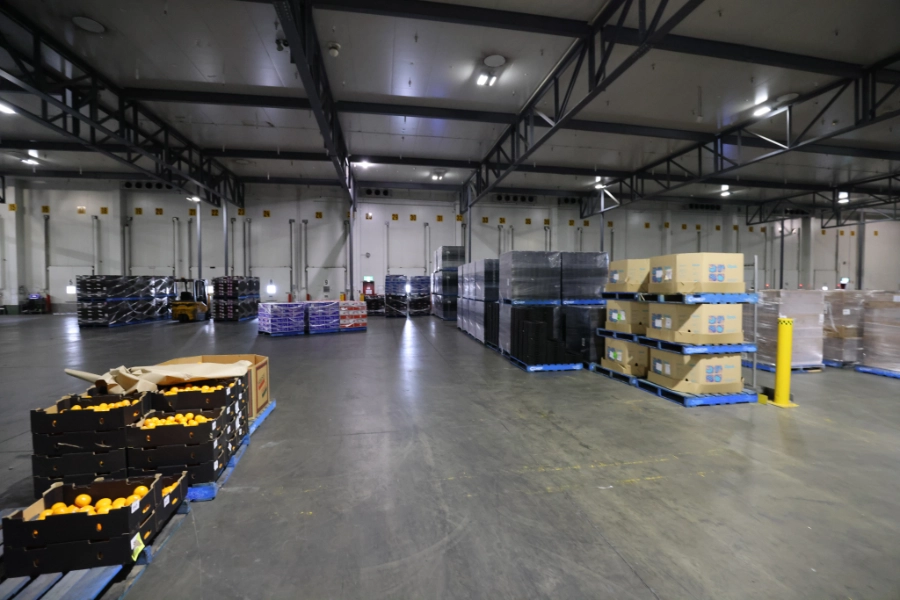
Refrigeration leak detection is relevant to any Sydney business that relies on mechanical cooling to store, process, or transport temperature-sensitive goods. This includes, but is not limited to:
- Warehouse and distribution centre operators with large cool rooms or blast freezers
- Food manufacturers and processors with process chillers or glycol systems
- Supermarkets, butchers, and fresh food retailers with display cases and back-of-house cool rooms
- Restaurants, cafes, and commercial kitchens with walk-in cool rooms or under-bench refrigeration
- Pharmaceutical and medical storage facilities with strict temperature compliance requirements
- Pet and animal supply retailers with refrigerated product lines
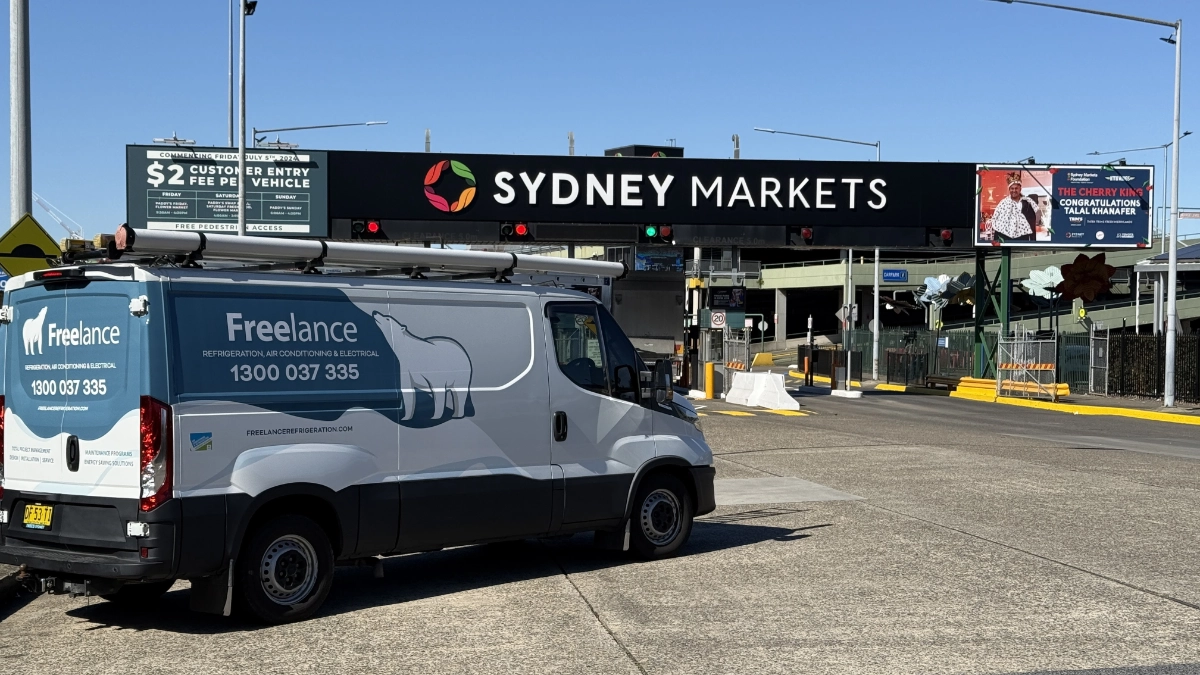
- Sydney Markets and wholesale produce operators
If your system has needed regassing more than once in the past 12 months, or if your energy bills have increased without an obvious explanation, a professional leak detection should be the first step before any further gas is added.
When It Might Not Be a Leak
Not every temperature or performance issue is caused by a refrigerant leak. Before assuming the system needs gas, it is worth considering other common causes of poor refrigeration performance in Sydney’s climate:
- Dirty condensers: Sydney’s airborne dust, pollen, and general particulate build-up on condenser coils reduces heat rejection. A condenser that has not been cleaned in six months or more can cause the system to underperform significantly.
- Blocked evaporators: Ice build-up, debris, or damaged defrost systems can restrict airflow across the evaporator, causing uneven temperatures or poor cooling.
- Electrical faults: Failing contactors, capacitors, or fan motors can mimic the symptoms of low refrigerant.
- Door seals and strip curtains: Worn seals or missing strip curtains allow warm, humid air into the cool room, forcing the system to work harder and sometimes giving the impression of a refrigerant problem.
A competent refrigeration technician will check these items as part of any service call before concluding that a regas is needed.
What to Expect from a Leak Detection Service
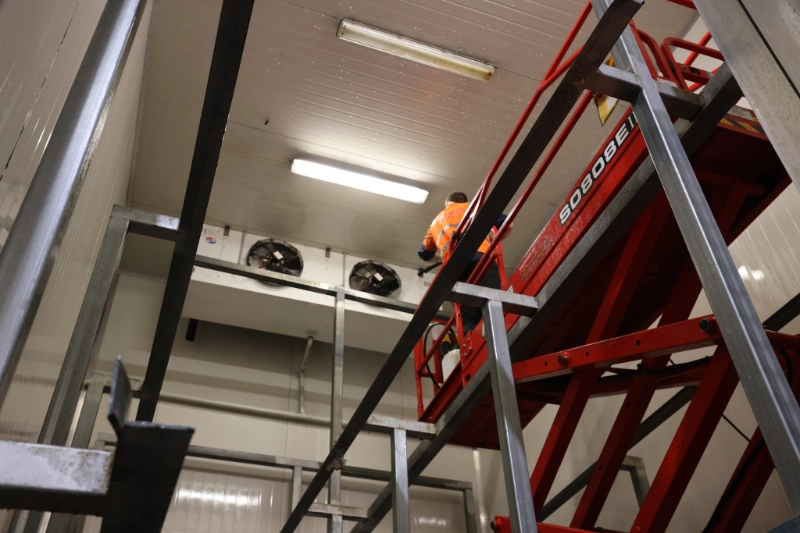
When you book a leak detection service with a qualified refrigeration company in Sydney, the process typically follows these steps:
- Initial assessment: The technician reviews the system’s history, checks operating pressures, and assesses superheat and subcooling to confirm whether the charge is low.
- Systematic detection: Using electronic detection, nitrogen testing, or UV dye as appropriate, the technician works through the system to locate the leak source.
- Report and recommendation: Once found, the technician provides a clear explanation of the leak location, the likely cause, and the recommended repair. This may range from a straightforward brazing repair to a component replacement.
- Repair and regas: After the repair is completed and pressure-tested, the system is evacuated and recharged with the correct amount of refrigerant.
- Performance verification: The technician confirms that the system is running within specification before leaving site.
The entire process can often be completed in a single visit for straightforward leaks. More complex systems or concealed leaks may require a follow-up appointment.f any service call before concluding that a regas is needed.
What our clients say
