

HACCP Temperature Calibration and Recording for Sydney Food Businesses
No call out fee
No service fee
No scissor lift fee
HACCP Temperature Calibration and Recording for Sydney Food Businesses
HACCP temperature calibration in Sydney is one of the simplest compliance requirements for food businesses to meet, and one of the most commonly missed. If your thermometers and temperature sensors have not been calibrated in the past 12 months, every temperature record you have taken since the last calibration is technically unreliable. That is not a technicality. It is the first thing an auditor or council inspector will check, and it is one of the fastest ways to fail a food safety inspection.
At Freelance Refrigeration, we see this constantly across Sydney food businesses: cool rooms running fine, temperature logs filled in every day, but the thermometer itself has never been verified. The records look good on paper, but they prove nothing.
What Temperature Calibration Actually Means
Calibration is the process of checking a thermometer or temperature sensor against a known reference point to confirm it is reading accurately. Over time, thermometers drift. A sensor that read 4°C twelve months ago might now read 3°C or 5°C. That one-degree difference can mean the difference between compliant and non-compliant storage, particularly for high-risk foods that must be held below 5°C.
Calibration does not necessarily mean replacing the thermometer. It means verifying that the reading is accurate and, if it is not, adjusting or replacing the device. The result is documented with a calibration certificate that records the date, the reference standard used, the readings before and after, and confirmation that the device is within acceptable tolerance.
Why Annual Calibration Is a HACCP Requirement
Under the HACCP (Hazard Analysis Critical Control Point) framework, temperature control is classified as a critical control point for any business that stores, prepares, or sells potentially hazardous food. That includes restaurants, cafes, supermarkets, butchers, caterers, aged care kitchens, and food manufacturers.
For temperature monitoring to be meaningful as a critical control point, the instruments doing the monitoring must be accurate. HACCP requires that temperature measuring devices are calibrated at defined intervals. For most food businesses, that interval is at least annually.
The logic is straightforward. If your thermometer is reading 3°C but the actual temperature is 6°C, your cool room is in the danger zone and you do not know it. Every temperature log entry made with that inaccurate thermometer is worthless as a compliance record, even if the logs were filled in perfectly.
What Needs to Be Calibrated
Every temperature measuring device used for food safety monitoring in your business should be included in your calibration schedule. This typically includes:
- Cool room and freezer room thermometers – both built-in display units and any standalone digital thermometers used for spot checks.
- Probe thermometers – handheld probes used to check food temperatures during receiving, cooking, cooling, and display.
- Data loggers and remote monitoring sensors – any automated system recording temperatures continuously, including Bluetooth and Wi-Fi connected sensors.
- Display case thermometers – sensors in refrigerated display cabinets used for retail or service.
- Infrared thermometers – if used for surface temperature checks during goods receiving or food preparation.
If a device is used to make a food safety decision or to create a compliance record, it must be calibrated. There are no exceptions for devices that are new or expensive.
What Happens When Calibration Is Overdue
When a council inspector, auditor, or insurance assessor reviews your food safety records, one of the first things they will look for is your calibration certificates. If you cannot produce a current certificate, several things can happen:
- Your temperature records may be deemed unreliable. Even if the logs are complete and the readings look correct, there is no way to verify they are accurate without a calibration certificate.
- You may receive an improvement notice requiring immediate calibration of all devices before the next inspection.
- Repeat non-compliance can lead to fines, increased inspection frequency, or escalation depending on the severity and the council.
- Insurance implications. If a stock loss occurs and your calibration records are not current, your insurer may dispute the claim on the basis that your monitoring was unverified.
How Temperature Recording Works Under HACCP
Temperature recording is the other half of the equation. Calibration ensures your devices are accurate. Recording ensures you have documented evidence that temperatures were maintained within safe limits.
Under HACCP and NSW food safety requirements, food businesses must record temperatures at critical control points at regular intervals. For most businesses, this means:
- Cool rooms and freezer rooms: Checked and recorded at least twice daily. Automated data loggers recording continuously are increasingly preferred by auditors.
- Goods receiving: Temperature checked on delivery for all potentially hazardous foods. Frozen goods must arrive at minus 18°C or below. Chilled goods must arrive at 5°C or below.
- Cooking and reheating: Core temperature must reach 75°C or above.
- Cooling: Cooked food must cool from 60°C to 21°C within two hours, then from 21°C to 5°C within a further four hours.
- Display and service: Hot food at 60°C or above. Cold food at 5°C or below. The two-hour and four-hour rule applies for food displayed outside temperature control.
Paper logbooks are still acceptable, but digital recording systems with time-stamped entries are stronger evidence in an audit. They cannot be backdated and they capture data continuously, including overnight and on weekends. See our full temperature logs and monitoring compliance checklist for more detail.
Digital Monitoring vs Paper Logs
Paper logs work, but they have known weaknesses. Entries can be missed, backdated, estimated, or filled in from memory at the end of a shift. Auditors know this, and paper-only records receive more scrutiny.
Digital temperature monitoring systems provide continuous recording with time-stamped data, automatic alerts when temperatures go out of range, and a tamper-proof audit trail. For businesses that want the strongest compliance position, digital monitoring combined with annual calibration is the most defensible approach.
Who Needs HACCP Temperature Calibration in Sydney
Any Sydney food business that stores, handles, or sells potentially hazardous food is required to maintain temperature control as a critical control point. This includes:
- Restaurants, cafes, and commercial kitchens.
- Supermarkets, grocers, and fresh food retailers.
- Butchers, fishmongers, and delicatessens.
- Caterers and event food service providers.
- Aged care and hospital food services.
- Food manufacturers, processors, and packers.
- Market stallholders and fresh produce wholesalers, including vendors trading inside the Sydney Markets.
Frequently Asked Questions
Q: How often do I need to calibrate my thermometers for HACCP compliance?
At minimum, annually. Some higher-risk operations such as pharmaceutical storage or export food processing may require calibration every six months. Your HACCP plan should specify the calibration interval for each device.
Q: Can I calibrate my own thermometers?
You can perform basic checks using an ice bath, but formal calibration with a traceable reference standard and a calibration certificate is what auditors and insurers look for. A professional calibration provides documented proof of accuracy.
Q: What is a calibration certificate?
A calibration certificate records the date, reference standard used, readings before and after adjustment, and confirmation the device is within acceptable tolerance. It is the evidence you produce during an audit to prove your monitoring is reliable.
Q: What temperature should my cool room be set at?
Potentially hazardous food must be stored at 5°C or below. Most cool rooms are set between 1°C and 4°C to provide a safety margin. Freezer rooms must maintain minus 18°C or below.
Q: Do digital data loggers need calibration too?
Yes. Any device used to make a food safety decision or generate a compliance record must be calibrated, including automated data loggers, remote sensors, handheld probes, and built-in thermometers.
Q: What areas of Sydney do you cover?
We cover Greater Sydney excluding the CBD (postcode 2000), including Western Sydney, the Hills District, Northern Beaches, Inner West, South West Sydney, and surrounding industrial areas.
Get Your Calibration Current Before Your Next Inspection
If your thermometers have not been calibrated in the past 12 months, your temperature records are vulnerable. It is a straightforward fix that takes less than an hour on site. Contact Freelance Refrigeration to book a calibration visit across Greater Sydney. You can also read more about our commercial refrigeration compliance and food safety services, understand your NSW food safety obligations for refrigeration, or browse our practical tips for refrigeration safety and compliance.
Related Compliance Resources
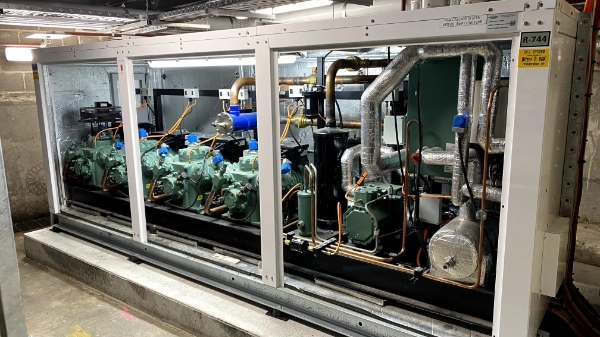
Monitoring & Compliance Checklist
Inspectors expect more than working fridges — they want consistent records, weekend coverage, and documented corrective actions. A practical checklist for staying audit-ready.
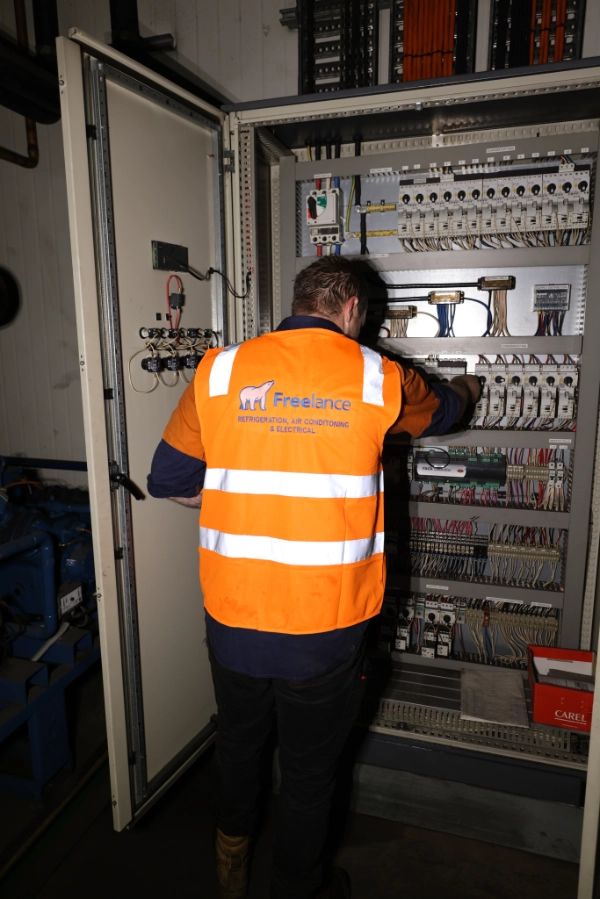
Practical Tips for Sydney Food Businesses
What Sydney council inspectors actually look for — overnight temperature control, logs that match reality, documented breach responses, and equipment condition in tight kitchens.
Compliance & Food Safety
Refrigeration is regulated infrastructure under NSW food safety law — failures can mean fines, forced closures, and insurance fallout. An overview of what's at stake for Sydney food businesses.